Do you ever feel like farming asks you to wrestle with heavy tools and machinery every single day? Picture this: The morning dew is still on the ground, the tractor grumbles to life, and your task is simple—adjust the height of a planter or shift a grain gate. But the lever is stiff and your hydraulic system leaks again. You try your best, but it’s a wrestling match. The machine wins and your back aches. By the time the adjustment is done, you’ve lost precious minutes, spilled seeds, or maybe wasted fertilizer.
It becomes a routine headache. Combine that with the dust, unforgiving weather, and long days, and you soon wonder: Isn’t there a smarter way to move, lift, or control equipment? Farmers around the world face these same struggles every season.
Hydraulic cylinders drip oil and need lots of maintenance. Pneumatic systems lose air and can’t hold position. If you want precise control, quiet operation, and systems that talk to your control panels or GPS, traditional equipment just doesn’t deliver. The farm demands automation. Machinery needs more muscle and brains, not more headaches.
The Real Cost of Outdated Systems
Here’s what you see when outdated actuation shows up:
- Hours lost, adjusting levers by hand in the mud.
- Poor seed depth, harming crop yields.
- Manual fertilizer spreading, wasting input—and money.
- Equipment stuck in a field thanks to a leaky hose.
- Constant need for fixes—extra trips for fluid, tools, spare parts.
You feel the pain every day. Costs go up. Yields go down. Your time is precious, and so is every resource on your farm.
There’s a better way—and precision farming has arrived.
Electric linear actuators are changing the game. At Jimi Technology, we’re leading this quiet revolution.
Meet the Smart Muscle of Modern Farming: Long Stroke Electric Actuators
Imagine this instead: You press a button from your cab or smartphone. Quietly, almost magically, your planter shifts to the perfect seed depth. The spray boom rises as the ground rolls, keeping the spread even. Every grain bin, barn gate, or greenhouse window moves when you tell it—no struggle, no leaks, no fuss.
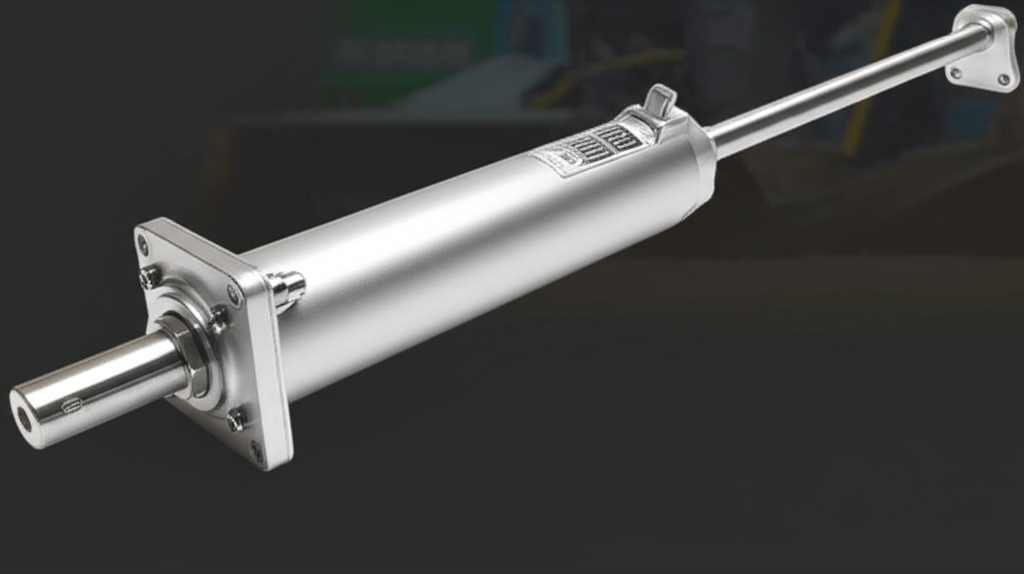
That’s the power of long stroke electric actuators. These simple, tough devices take electrical energy and turn it into smooth, strong, reliable motion—pushing, pulling, lifting, or tilting with a flick of your finger.
What Makes a Long Stroke Electric Actuator Special?
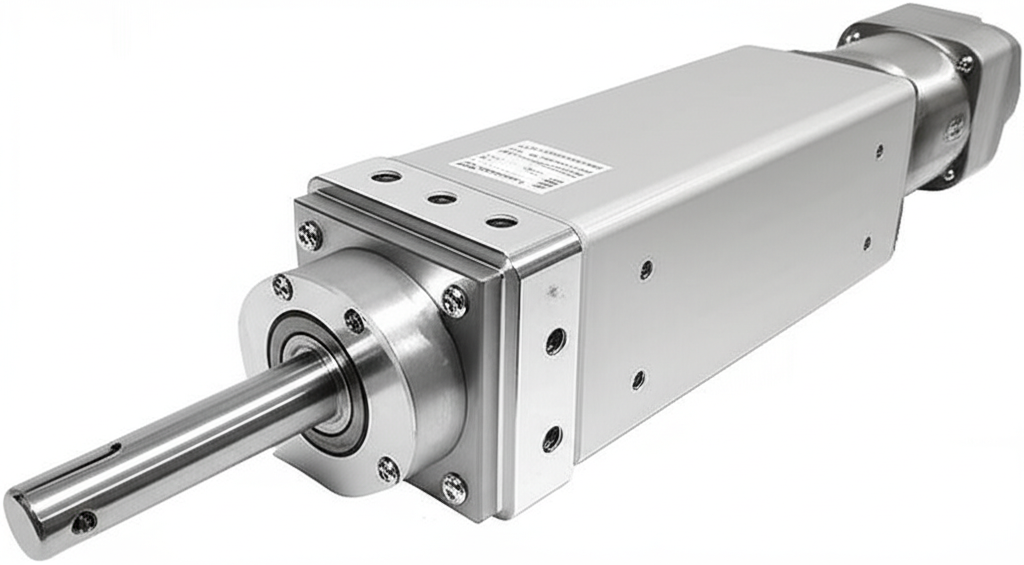
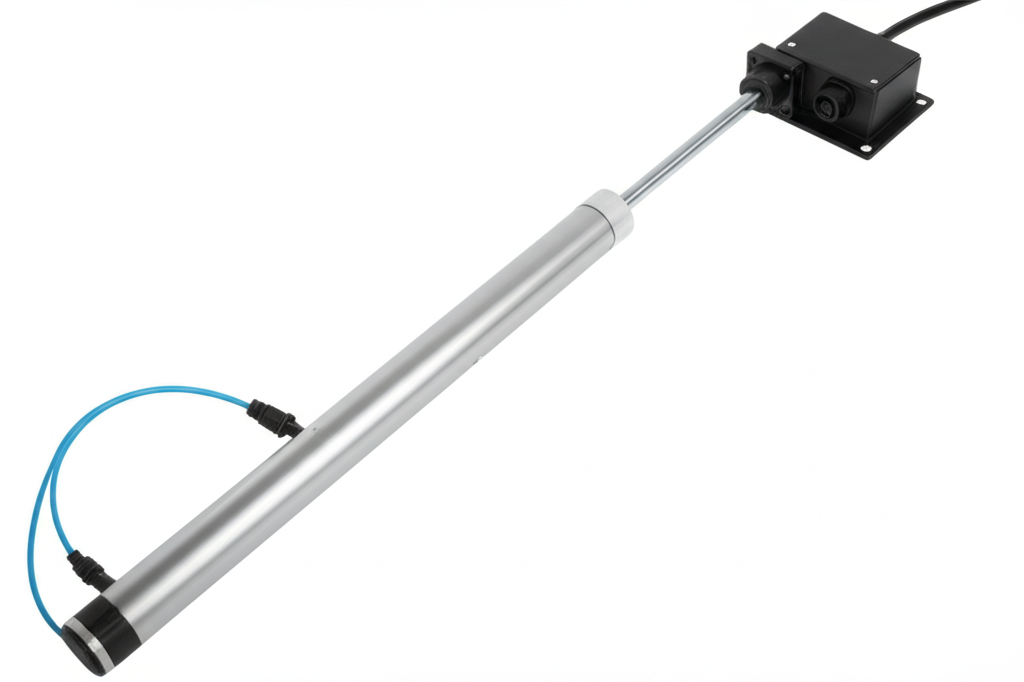
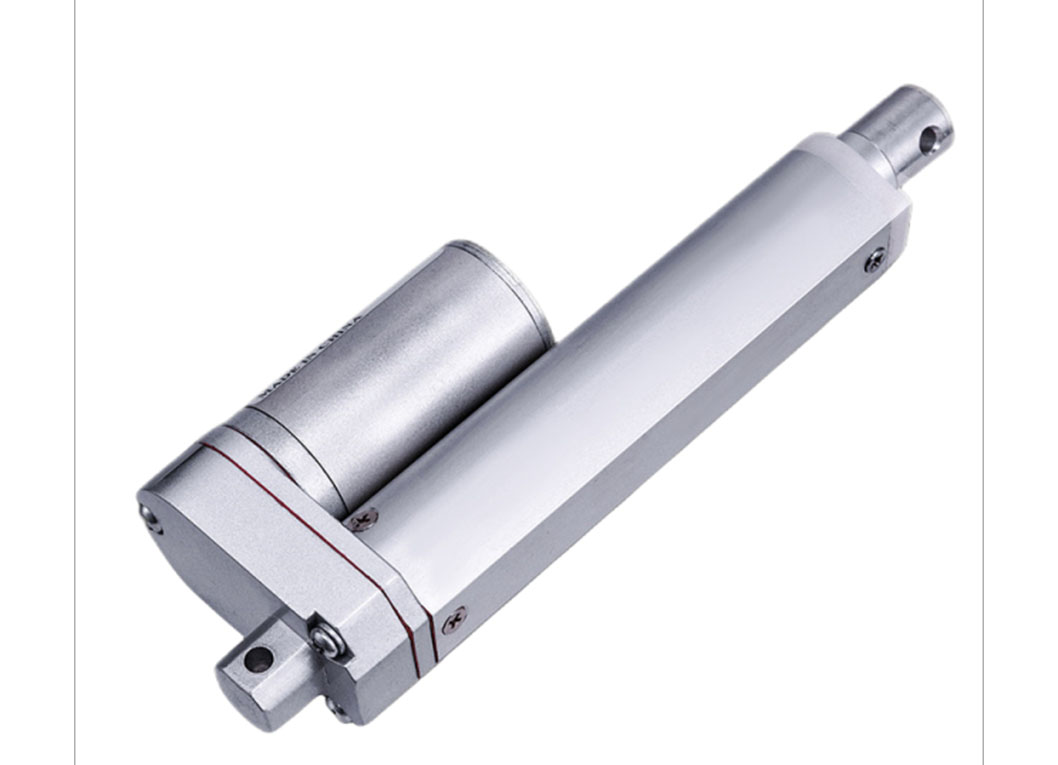
The genius is in the details. A long stroke actuator isn’t just a motor and a rod. It’s a carefully built system, made of the following:
- DC or brushless motor: Delivers quiet, efficient power for years.
- High-strength gearbox: Multiplies torque for heavy duty jobs.
- Ball screw or acme screw: Converts rotary motion to strong, straight movement.
- Robust nut and housing: Protects all the parts from dust, rain, and hard knocks.
- Limit switches & feedback sensors: Tell the system exactly where it is; you get pinpoint control.
Typical actuators can deliver force from 500 N up to a whopping 25,000 N (that’s over 5,600 lbs). Strokes? From a modest four inches to more than five feet, so almost any farm job is possible.
Do you need an actuator that works in the rain, mud, or under a steaming sun? Ours can be built with IP67 and IP68 ratings for full dust and water protection. Stainless steel and marine-grade coatings handle harsh fertilizers—and we test them in the field.
Why Farm with Electric? The Simple Case for Precision Automation
If you think all actuators are alike, think again. Electric goes where hydraulics and pneumatics can’t.
- Precision and Control: Electric actuators can adjust as little as ±0.05 mm. That’s the difference between a good crop and a great one. Plant at just the right depth, or meter out fertilizer with zero waste.
- Energy Smart: No pumps or compressors running all day. For on/off jobs, electric actuators use 80% less energy than hydraulic cylinders. Many even run on your tractor’s 12V, 24V, or 48V system.
- Clean and Quiet: Electric never leaks oil onto soil or crops—good for the earth and your bottom line.
- Maintenance-Free: High-quality models deliver over 20,000 hours of action without failing. With no fluid to replace, downtime drops.
- Smart Farming, Data-Driven: Plug into your PLC, CAN bus, or Modbus system. Use data from sensors and GPS to automate jobs or fine-tune every move.
- Safe and Reliable: Overload protection, thermal sensors, and sealed units mean safer, more predictable work in any weather.
Wondering where these smart muscles fit in? Let’s see how they work across your operation.
Key Applications: From Planting to Livestock, One Button Does It All
Planting and Seeding
- Seed drill depth control: Get perfect germination, every seed, every row.
- Variable rate technology: Spread just the right amount of seed or fertilizer—nothing wasted, more yield per input.
Spraying & Fertilizing
- Boom height adjustment: Keep your spray just above the canopy, even as the ground rolls underfoot.
- Nozzle and flow control: Shift angles or amount on the fly for uniform crops, no overdosing.
Harvesting & Processing

- Header and chute control: Raise, lower, tilt, or swing—adapting to crop and ground instantly.
- Grain cart gates: Let grain flow, pause, or stop—all without getting out in the dust.
Tillage & Cultivation
- Disc angle adjustments: Get the tilt just right for your soil.
- Implement depth control: One actuator, zero guesswork, perfect plots.
Livestock & General Farm Automation
- Automated feeders: Feed gate open, close, or meter out—no extra trips from the barn to the silo.
- Barn vent or greenhouse window: Keep air moving for happy, healthy animals and thriving crops.
- Sorting gates and access: Move livestock smoothly, handle animals with less stress and risk.
Bringing It All Together: Must-Have Features in Farm-Ready Actuators
When you choose an actuator for your operation, some details matter most:
- Stroke Length: Need to lift or slide something two feet? Five feet? We custom-build strokes to fit.
- Force Rating: Push or pull thousands of pounds when the going gets tough.
- IP67/IP68 Protection: Rain, mud, or high-pressure washing is no problem.
- Duty Cycle: Run all day or in bursts, your call.
- Smart Feedback: Built-in sensors (potentiometer, Hall effect, optic) keep movement dead-on.
- Open Communication: Works with PLC, CAN bus, Modbus, analog or digital—fitting right into your smart farming setup.
- Tough Materials: Corrosion-resistant housings, robust gears, and sealed connectors keep dust and water out.
For heavy equipment, look for high duty cycle and overload protection. Smaller jobs, like greenhouse automation, benefit from compact electric actuators.
Need ideas for mounting? Visit our guide on Mounting Brackets to see how you can fix actuators securely, even on retrofitted gear.
Real Results: Efficiency in the Field
How much do these changes add up to? Consider this:
- Seed/Fertilizer Savings: Case studies prove that variable rate application can cut input costs by 15-20%. That’s money back in your pocket.
- Water Savings: Automated irrigation using electric actuators slashes water use by 20-30%.
- Maintenance Down: One farm reported maintenance costs dropping 40% after switching from hydraulics to electric actuators for sprayer booms.
- Longevity: With mean time between failures above 20,000 hours, your busiest seasons suddenly run smoother.
Let’s not forget smart integration. A major tractor company fitted CAN bus electric actuators to their latest planters. Every row adjusted on the fly, reading soil from GPS and sensors. The result? Crop emergence went up 7%—and final yield by 4%—over the typical hydraulic setup.
Comparison Table: Smart Gains With Electric Actuators
| Feature | Hydraulic Cylinders | Electric Long Stroke Actuators |
|---|---|---|
| Precision Adjustment | Low (manual, discrete steps) | High (sub-mm, continuous) |
| Energy Use | High (constant pump run) | Low (on-demand only) |
| Maintenance | Frequent (seals, leaks) | Minimal (no oil, few moving parts) |
| Control & Automation | Limited | Full integration with smart systems |
| Environmental Impact | Fluid leaks | No leaks; clean operation |
| Noise Level | Moderate/High | Quiet (<60 dB typical) |
| Force & Stroke Customization | Limited, mechanical | Fully customizable |
Jimi Technology: Building Trust, Delivering Results
We at Jimi have been at the heart of automation for years. Across thousands of farms and factory floors, our actuators power everything from self-driving tractors to smart greenhouse shades. What drives us is simple: Your success.
- Every Jimi actuator undergoes rigorous real-world testing: We toss them in mud, subject them to frost, and verify their limits in pounding heat.
- We use the highest grade materials—marine and food-safe coatings, lock-tight connectors, and all-weather seals.
- Our engineering teams offer world-class support before, during, and after your purchase.
Your needs aren’t one-size-fits-all, so our solutions aren’t either. Need a custom stroke electric actuator? We build it. Have a question about CAN bus integration? Our support team has decades of experience. Not sure if electric can handle your heavy-duty jobs? Put us to the test.
Ready to make your equipment smarter and life easier? Start by exploring our High Speed Long Stroke Linear Actuator System—built for tough, precision farming. Curious about controller options? Try our Actuator Controllers for simple setup. Want more info on electric versus other actuation types? Our resources on China Electric Cylinder Factory, Quiet Linear Actuators, and Electric Cylinders break it all down.
Choosing the Best Actuator for Your Field
Don’t settle for close enough. To pick the right actuator, ask:
- What force do I need? Heavy tillage needs more muscle than seed metering.
- What stroke length covers my job? Measure twice; order once.
- How will I control it? Do I want plug-and-play buttons, remote control, or a tie-in to my GPS/software?
- What will the actuator face? Rain, mud, fertilizer dust, or daily cycles? Make sure your pick is up to the task.
- Supplier support: Does your partner offer tech help, spare parts, or even custom builds?
Calculate total cost of ownership. Electric actuators may cost more upfront than basic hydraulics, but when you add up energy, downtime, labor, and part costs, electric almost always wins the long game.
A Glimpse Ahead: The Farm of Tomorrow
Automation isn’t just a buzzword. It’s the reality on leading farms everywhere. AI and IoT now mean your machinery can talk, learn, and predict maintenance needs. Self-driving seeders and harvesters use electric actuators for every movement. Solar- and battery-powered robots stroll rows, spraying or sampling, with smart actuators running quietly beneath panels and hoods.
As agriculture gets smarter, the need for heavy-duty, reliable, data-ready actuators grows fast. By 2028, global agricultural automation will more than double, and electric actuators will be at the core. Data from the field tells the story: bigger yields, less waste, happier farmers.
The Bottom Line: Electric Actuators Drive Sustainable, Smart Agriculture
You work hard for every harvest. Why not make every job easier, safer, and more productive? Long stroke electric actuators bring the muscle and the brains, letting you automate, fine-tune, and adapt—all at the push of a button.
- No more craning or pulling. Just results.
- Fewer breakdowns, less waste, and a cleaner, greener farm.
- More time and energy for what matters most.
Partner with Jimi Technology, your expert in automation. Whether you’re retrofitting an old combine, designing the next smart planter, or just want to see what automation can do, we have the gear—and the team—to help you succeed.
Ready to get started? Explore our solutions for Industrial Linear Actuators, see our lineup of Electric Cylinders, or contact us for a custom quote. Your future in precision farming starts now—don’t let old tech hold you back. Let’s move your farm forward, one smart push at a time.