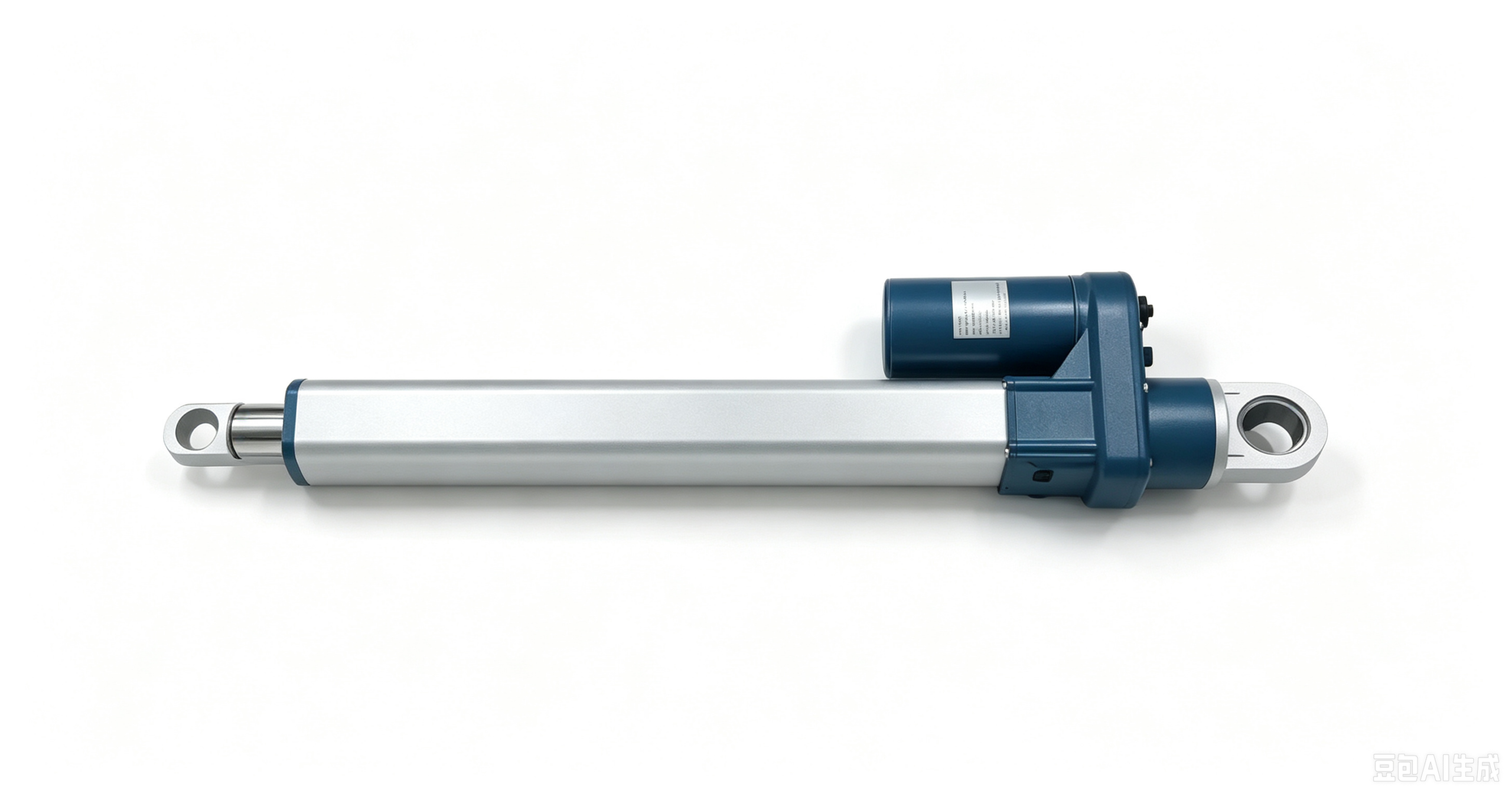
Aircraft Linear Actuators: A Comprehensive Guide to Five Critical Aerospace Applications

Introduction: The Rising Demand for Aircraft Linear Actuators

The global aerospace industry is undergoing a profound transformation driven by the More Electric Aircraft (MEA) initiative, and at the heart of this evolution lies the growing adoption of aircraft linear actuators. These electromechanical devices convert rotational motion into precise linear displacement, enabling controlled movement across virtually every movable system on modern aircraft—from passenger seats to flight control surfaces.

According to industry forecasts, the global aircraft actuators market was valued at approximately USD 9.8–11.03 billion in 2025 and is projected to reach USD 15.9–18.06 billion by 2033, growing at a compound annual growth rate (CAGR) of 6.2% to 7.3%

. Within this broader market, aircraft linear actuators represent the dominant motion type, accounting for approximately 64% of the high-performance actuators segment

. The shift from conventional hydraulic and pneumatic systems toward electromechanical solutions is accelerating, driven by demands for reduced weight, improved fuel efficiency, lower maintenance costs, and enhanced environmental sustainability.

This article provides an in-depth examination of five critical aerospace applications where aircraft linear actuators are transforming operational capabilities: aircraft seat actuation, door and cargo door operation, landing gear deployment, flight control surface positioning, and unmanned aerial vehicle (UAV) control surface actuation. Each section explores the technical requirements, real-world examples, and the specific advantages that electric linear actuation brings to these demanding environments.

1. Aircraft Seat Actuation Systems: Enhancing Passenger Comfort Through Precision Motion
1. Aircraft Seat Actuation Systems: Enhancing Passenger Comfort Through Precision Motion

Application Overview

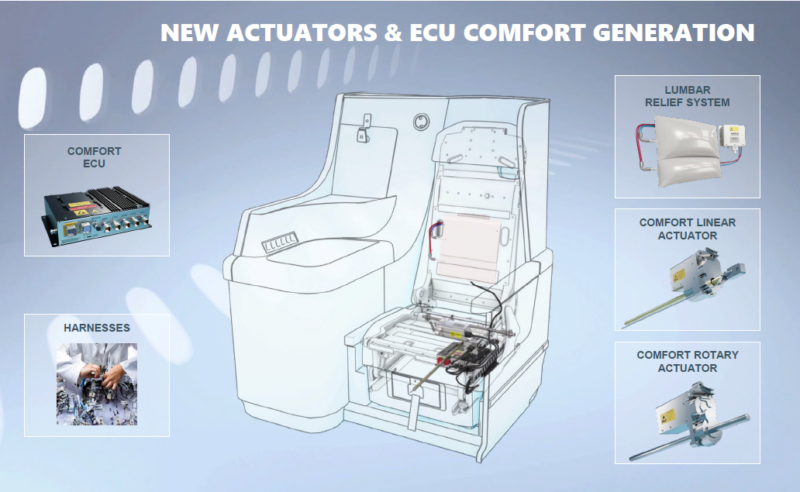
One of the most visible and widely deployed applications of aircraft linear actuators is in passenger seat adjustment systems. Modern commercial aircraft seats—whether in economy, business, or first-class cabins—rely on compact electromechanical actuators to enable smooth, quiet, and precise movement across multiple degrees of freedom. These systems control seat slide (fore-aft positioning), recline angle adjustment, leg rest elevation, lumbar support positioning, and in premium cabins, full lie-flat bed transformation.

Technical Requirements and Design Considerations

Aircraft linear actuators employed in seat actuation must satisfy a unique combination of aerospace-grade requirements. First and foremost is weight minimization: every gram saved in seat actuation contributes directly to fuel efficiency, particularly when multiplied across hundreds of seats on large commercial aircraft. Leading manufacturers such as Safran, Bühler Motor, and DewertOkin have developed specialized lightweight actuator modules using high-strength aluminum alloys and compact brushless DC motor architectures.
Equally critical is reliability under cyclic loading. Seat actuators must endure thousands of adjustment cycles over an aircraft’s operational life—often exceeding 50,000 to 100,000 cycles—without degradation in performance or noise characteristics. The actuator design must incorporate robust lead screw or ball screw mechanisms, self-lubricating materials, and sealed enclosures to prevent contamination from food particles, liquids, and dust common in cabin environments.
Electromagnetic compatibility (EMC) represents another essential design parameter. Seat actuators must operate without generating or being susceptible to electromagnetic interference that could affect avionics systems. Additionally, these actuators must comply with stringent flammability and smoke-toxicity standards (e.g., FAR 25.853), driving the use of specialized housing materials and fire-resistant lubricants.

Real-World Examples and Implementations

In premium cabin applications, aircraft linear actuators enable the sophisticated “lie-flat” seat mechanisms found on long-haul international flights. For example, business-class seats on aircraft such as the Boeing 787 Dreamliner and Airbus A350 integrate multiple synchronized linear actuators to achieve seamless transformation from upright seating to fully flat sleeping surfaces. These systems often employ CAN bus communication protocols for centralized control, allowing flight attendants to manage seat configurations and enabling automated pre-landing return-to-upright functions.

The market for aircraft seat actuation is expanding in tandem with global air traffic growth. The International Air Transport Association (IATA) projects that air traffic will double by 2037, requiring over 37,000 new passenger aircraft

. Each of these aircraft requires dozens of seat actuators, creating substantial demand for next-generation aircraft linear actuators that offer improved power density, reduced acoustic signatures, and integrated position feedback for smart cabin management systems.

Suitable Products:

2. Aircraft Door and Cargo Door Operation: Electrifying Access Systems

Spaceflight linear actuators

Application Overview

The transition from hydraulic to electric actuation in aircraft door systems represents one of the most significant safety and operational advancements in modern aviation. Aircraft linear actuators are now extensively used for passenger boarding doors, emergency exit doors, and cargo compartment doors, replacing traditional hydraulic actuators that require complex plumbing, hydraulic fluid reservoirs, and continuous pressurization systems.
Electric door actuation systems offer compelling advantages: elimination of hydraulic fluid leakage risks, reduced system weight, simplified maintenance, and the ability to integrate sophisticated control logic for sequenced locking and unlocking operations. The fail-safe and redundancy requirements for door systems are exceptionally stringent, as door malfunctions can directly impact passenger safety and flight operations.

Technical Requirements and Design Considerations

Door actuation systems demand high-torque rotary or high-force linear actuators capable of overcoming seal friction, pressure differential loads, and inertial forces during opening and closing cycles. For main passenger doors on wide-body aircraft such as the Boeing 777 or Airbus A380, the actuator system must generate forces sufficient to compress door seals against pressurized cabin environments while maintaining smooth, controlled motion that prevents sudden movements hazardous to ground personnel.

Redundancy is a cornerstone of door actuator design. Many systems incorporate dual-motor architectures where two independent electric motors drive a common actuator mechanism, ensuring that a single motor failure does not compromise door operability

. Additionally, these actuators must include mechanical locking mechanisms that maintain door closure under all flight conditions, including rapid decompression events and emergency situations.

Environmental sealing is another critical factor. Door actuators are exposed to extreme temperature variations—from -40°C on the tarmac in arctic conditions to +70°C in direct sunlight on hot runways—as well as precipitation, de-icing fluids, and salt spray in coastal operations. High-reliability aircraft linear actuators for door applications therefore incorporate IP67 or higher environmental sealing, corrosion-resistant coatings, and sealed electrical connectors.

Real-World Examples and Implementations

Saab International Deutschland GmbH has developed specialized electric actuators for aircraft door applications, offering both rotary and linear configurations tailored to specific door geometries and load requirements. These actuators integrate position sensors, torque limiting functions, and electronic control units that communicate with the aircraft’s central door monitoring system.
Similarly, Elektro-Metall Export GmbH manufactures linear actuators specifically designed for aircraft door and cargo door operations, emphasizing compact envelope dimensions and high force-to-weight ratios. These systems are increasingly specified on next-generation aircraft programs where the More Electric Aircraft philosophy drives the elimination of centralized hydraulic systems.
For cargo door applications on freighter aircraft such as the Boeing 747-8F and Airbus A330-200F, aircraft linear actuators provide the high-force lifting and lowering motion required for large upward-opening nose or side cargo doors. These actuators often work in conjunction with hydraulic dampers or electromechanical braking systems to control door descent under gravity, preventing uncontrolled closing that could damage cargo or injure ground crew.

Suitable Products:

3. Landing Gear Deployment and Retraction: High-Load Electromechanical Actuation

3. Landing Gear Deployment and Retraction: High-Load Electromechanical Actuation

Application Overview

Landing gear actuation represents one of the most mechanically demanding applications for aircraft linear actuators, requiring the ability to deploy and retract heavy landing gear assemblies under significant aerodynamic and gravitational loads while ensuring positive mechanical locking in both the extended and retracted positions. Traditionally dominated by hydraulic actuators, landing gear systems are increasingly adopting electromechanical actuator (EMA) technology as part of the broader More Electric Aircraft initiative.
The landing gear actuator must perform several critical functions: extending the gear assembly from the stowed position within the fuselage or wing, locking the gear in the down-and-locked position for landing, unlocking and retracting the gear after takeoff, and providing an emergency release capability in the event of primary system failure.

Technical Requirements and Design Considerations

Landing gear aircraft linear actuators must deliver exceptionally high force output—often in the range of several thousand to tens of thousands of pounds-force—while maintaining precise position control and rapid response times. The actuator must withstand severe shock and vibration loads during landing impact, as well as sustained aerodynamic drag forces during gear-extended flight phases.
Self-locking capability is paramount. Landing gear actuators must incorporate irreversible drive mechanisms—typically accomplished through high-efficiency ball screws with brake systems or worm gear configurations—that prevent back-driving from landing loads or aerodynamic forces. This ensures that the gear remains securely locked even in the complete absence of electrical power.
The emergency extension function presents unique engineering challenges. In the event of primary electrical system failure, the landing gear must be capable of gravity-driven free-fall extension, with the actuator providing controlled damping to prevent structural damage while ensuring positive down-and-locked indication. Some advanced designs incorporate pyrotechnic release mechanisms or stored-energy springs as backup systems.
Environmental durability requirements are extreme. Landing gear actuators operate in the most hostile environment on the aircraft—exposed to runway debris, salt spray, hydraulic fluid, de-icing chemicals, and temperature extremes from high-altitude cold soak to brake-heated wheel well conditions. Materials selection, sealing technology, and surface treatments are therefore critical to achieving the required operational life.

Real-World Examples and Implementations

TAMAGAWA SEIKI, a leading aerospace actuator manufacturer, has developed specialized landing gear actuators that exemplify the integration of high-force linear actuation with advanced position sensing and control electronics

. These actuators incorporate resolver or LVDT (Linear Variable Differential Transformer) position feedback for closed-loop control, enabling precise gear positioning and real-time health monitoring.

Parker Aerospace and Liebherr-Aerospace have been at the forefront of developing electromechanical landing gear actuation systems for next-generation aircraft platforms. The Boeing 787 Dreamliner and Airbus A350 incorporate advanced landing gear actuation architectures that, while still utilizing hydraulic power for primary actuation, increasingly integrate electromechanical components for door sequencing, locking, and position monitoring.
Looking forward, fully electric landing gear systems are under active development for future aircraft programs. These systems would eliminate the need for hydraulic landing gear extension/retraction entirely, replacing hydraulic actuators with high-power aircraft linear actuators driven by the aircraft’s electrical distribution system. This transition promises significant weight savings, reduced maintenance, and improved dispatch reliability.

Suitable Products:

4. Flight Control Surfaces: Precision Actuation for Flaps, Spoilers, and Ailerons

Technical Requirements and Design Considerations Flight control aircraft linear actuators must satisfy extraordinarily demanding performance specifications. Position accuracy and repeatability are critical—aileron actuators must hold precise angles to maintain coordinated flight, while flap actuators must achieve symmetric deployment across multiple actuator channels to prevent asymmetric lift conditions that could compromise aircraft controllability. Bandwidth and dynamic response are equally important. Spoiler actuators used for roll control or speed brakes must respond rapidly to pilot or autopilot commands, with small-amplitude control bandwidths exceeding 15 Hz in advanced applications . This requires actuators with low inertia, high-power density brushless DC motors, and advanced servo control algorithms. Force fighting prevention is a critical consideration in multi-actuator flight control surface architectures. Large surfaces such as trailing-edge flaps may be driven by two or more synchronized aircraft linear actuators. These actuators must maintain precise force and position synchronization to prevent mechanical binding, structural fatigue, or asymmetric loading. Modern systems employ active force-equalization control strategies that continuously monitor and adjust individual actuator outputs. Environmental and reliability requirements are uncompromising. Flight control actuators must operate across extreme temperature ranges (-55°C to +125°C or wider), survive lightning strike electromagnetic effects, and function reliably after exposure to high-altitude radiation. Mean time between failures (MTBF) requirements often exceed 100,000 hours, with failure modes rigorously analyzed to ensure no single failure can cause hazardous or catastrophic effects. Real-World Examples and Implementations Moog Inc., a global leader in aerospace actuation, provides flight control actuators for numerous commercial and military aircraft platforms. Their electromechanical and electrohydrostatic actuators (EHAs) are employed on aircraft including the Airbus A380, A350, and Boeing 787, where they drive primary flight control surfaces with exceptional precision and reliability. Woodward Inc. and Collins Aerospace (formerly UTC Aerospace Systems) similarly supply advanced flight control actuation solutions that integrate aircraft linear actuators with sophisticated electronic control and health monitoring capabilities. These "smart actuators" incorporate built-in test equipment (BITE), temperature sensors, and vibration monitors that enable predictive maintenance and condition-based servicing. The F-35 Lightning II fighter aircraft exemplifies the state-of-the-art in flight control actuation, utilizing entirely electric actuation for its control surfaces—a significant departure from traditional hydraulic systems. This all-electric approach reduces weight, eliminates hydraulic fluid fire hazards, and simplifies logistics, while demanding aircraft linear actuators with unprecedented power density and thermal management capabilities. For commercial applications, the trend toward electro-hydrostatic actuators (EHAs) represents an important transitional technology. EHAs combine the high-force capability of hydraulic actuation with the distributed architecture of electric systems, using localized hydraulic circuits powered by electric motors rather than centralized hydraulic systems. These systems employ aircraft linear actuators as the final output stage, providing a pathway toward fully electromechanical flight control actuation in future aircraft generations.

Application Overview

Flight control surface actuation represents the most performance-critical application of aircraft linear actuators in terms of precision, bandwidth, and safety. These actuators drive the primary and secondary flight control surfaces—including ailerons, elevators, rudder, flaps, slats, and spoilers—that enable an aircraft to maneuver, stabilize, and optimize aerodynamic performance across the entire flight envelope.
The transition from purely mechanical cable-and-pulley systems to fly-by-wire (FBW) architectures has fundamentally transformed flight control actuation. Modern FBW systems rely on aircraft linear actuators to translate digital flight control computer commands into precise mechanical surface movements, often with response times measured in milliseconds and position accuracy requirements tighter than ±0.1 degrees.

Technical Requirements and Design Considerations

Flight control aircraft linear actuators must satisfy extraordinarily demanding performance specifications. Position accuracy and repeatability are critical—aileron actuators must hold precise angles to maintain coordinated flight, while flap actuators must achieve symmetric deployment across multiple actuator channels to prevent asymmetric lift conditions that could compromise aircraft controllability.

Bandwidth and dynamic response are equally important. Spoiler actuators used for roll control or speed brakes must respond rapidly to pilot or autopilot commands, with small-amplitude control bandwidths exceeding 15 Hz in advanced applications

. This requires actuators with low inertia, high-power density brushless DC motors, and advanced servo control algorithms.

Force fighting prevention is a critical consideration in multi-actuator flight control surface architectures. Large surfaces such as trailing-edge flaps may be driven by two or more synchronized aircraft linear actuators. These actuators must maintain precise force and position synchronization to prevent mechanical binding, structural fatigue, or asymmetric loading. Modern systems employ active force-equalization control strategies that continuously monitor and adjust individual actuator outputs.
Environmental and reliability requirements are uncompromising. Flight control actuators must operate across extreme temperature ranges (-55°C to +125°C or wider), survive lightning strike electromagnetic effects, and function reliably after exposure to high-altitude radiation. Mean time between failures (MTBF) requirements often exceed 100,000 hours, with failure modes rigorously analyzed to ensure no single failure can cause hazardous or catastrophic effects.

Real-World Examples and Implementations

Moog Inc., a global leader in aerospace actuation, provides flight control actuators for numerous commercial and military aircraft platforms. Their electromechanical and electrohydrostatic actuators (EHAs) are employed on aircraft including the Airbus A380, A350, and Boeing 787, where they drive primary flight control surfaces with exceptional precision and reliability.
Woodward Inc. and Collins Aerospace (formerly UTC Aerospace Systems) similarly supply advanced flight control actuation solutions that integrate aircraft linear actuators with sophisticated electronic control and health monitoring capabilities. These “smart actuators” incorporate built-in test equipment (BITE), temperature sensors, and vibration monitors that enable predictive maintenance and condition-based servicing.
The F-35 Lightning II fighter aircraft exemplifies the state-of-the-art in flight control actuation, utilizing entirely electric actuation for its control surfaces—a significant departure from traditional hydraulic systems. This all-electric approach reduces weight, eliminates hydraulic fluid fire hazards, and simplifies logistics, while demanding aircraft linear actuators with unprecedented power density and thermal management capabilities.
For commercial applications, the trend toward electro-hydrostatic actuators (EHAs) represents an important transitional technology. EHAs combine the high-force capability of hydraulic actuation with the distributed architecture of electric systems, using localized hydraulic circuits powered by electric motors rather than centralized hydraulic systems. These systems employ aircraft linear actuators as the final output stage, providing a pathway toward fully electromechanical flight control actuation in future aircraft generations.

Suitable Products: