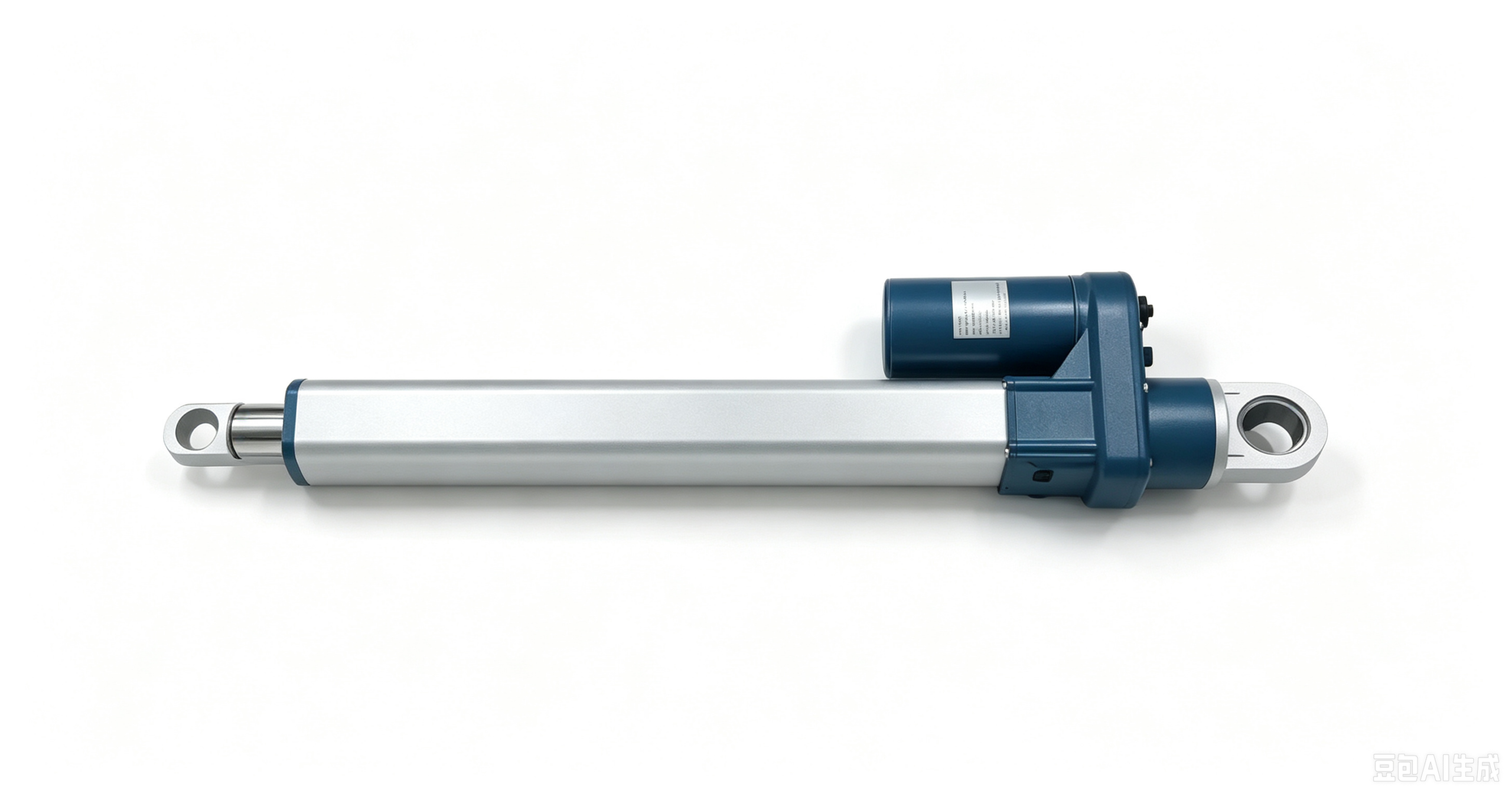
Military Linear Actuators: Critical Electromechanical Solutions for Modern Defense Applications
Introduction
In the rapidly evolving landscape of modern military technology, military linear actuators have emerged as indispensable electromechanical devices that convert rotational motion into precise linear displacement. These robust systems are fundamentally transforming how defense equipment operates across land, sea, and air domains. Unlike traditional hydraulic systems that rely on fluid power, electromechanical linear actuators offer superior precision, enhanced reliability, reduced maintenance requirements, and improved operational safety—qualities that are absolutely critical in combat environments where system failure is not an option.
The global defense industry has witnessed a paradigm shift toward electrification of mechanical systems. Military linear actuators are at the forefront of this transformation, replacing hydraulic cylinders in applications ranging from heavy armored vehicle turrets to precision missile launch systems. This transition is driven by the need for cleaner operation, reduced battlefield vulnerability (hydraulic fluid leaks present fire hazards and maintenance challenges), and the integration of digital control systems that demand precise feedback and programmability.
Modern military linear actuators are engineered to withstand extreme conditions including intense shock and vibration, temperature fluctuations from arctic cold to desert heat, electromagnetic interference, and exposure to chemical agents. They must meet stringent military standards such as MIL-STD-810 for environmental testing and MIL-STD-461 for electromagnetic compatibility. This article explores five critical application domains where military linear actuators are revolutionizing defense capabilities: combat vehicle turret control, radar and antenna positioning, military vehicle access systems, missile and rocket launcher positioning, and underwater unmanned vehicle operations.
1. Combat Vehicle Turret and Weapon Station Elevation Control
The Evolution from Hydraulic to Electromechanical Systems
One of the most demanding applications for military linear actuators lies in the control of combat vehicle turrets and remote weapon stations. Main battle tanks, infantry fighting vehicles, and armored personnel carriers require precise, rapid, and reliable control of turret rotation and gun barrel elevation to engage targets effectively while moving across rough terrain. Traditionally, these functions were powered by hydraulic systems. However, hydraulic mechanisms present significant drawbacks in combat vehicles: they require extensive plumbing that can be damaged by ballistic impacts, hydraulic fluid leakage creates fire hazards and maintenance headaches, and they offer limited precision compared to modern electromechanical alternatives.
Military linear actuators designed for turret control applications must deliver exceptionally high force capacity—often exceeding several tons of thrust—to elevate heavy gun barrels and stabilize them against recoil forces. These high-capacity linear actuators feature ball screw or roller screw mechanisms housed in ruggedized enclosures with hardened steel construction. The electromechanical design enables precise positioning with accuracy measured in fractions of a millimeter, allowing gunners to achieve first-round hits at extended ranges.
Precision Gun Control and Stabilization
Modern fire-control systems rely on military linear actuators to achieve the split-second accuracy required for moving-target engagement. When a main battle tank traverses uneven terrain at high speed, the gun barrel must remain perfectly stabilized on target despite the vehicle’s pitch, roll, and yaw movements. Linear actuators work in conjunction with gyroscopic sensors and digital control computers to make continuous micro-adjustments to barrel elevation and turret azimuth. This dynamic stabilization capability would be impossible to achieve with the same level of precision using legacy hydraulic systems.
The integration of military linear actuators into turret control systems also facilitates the implementation of “hunter-killer” capabilities, where the vehicle commander can independently search for targets while the gunner engages another target. Dual-axis linear actuator systems enable the independent movement of commander’s independent thermal viewers and the main weapon system, dramatically increasing situational awareness and engagement speed.
Application Examples and Real-World Implementations
Leading defense contractors have increasingly specified electromechanical linear actuators for next-generation combat vehicle programs. High-capacity military linear actuators rated for combat vehicle turret control are specifically engineered as ideal replacements for hydraulic system upgrades. These units feature integrated absolute encoders that provide continuous position feedback to the vehicle’s fire-control computer, eliminating the need for external limit switches and reducing wiring complexity.
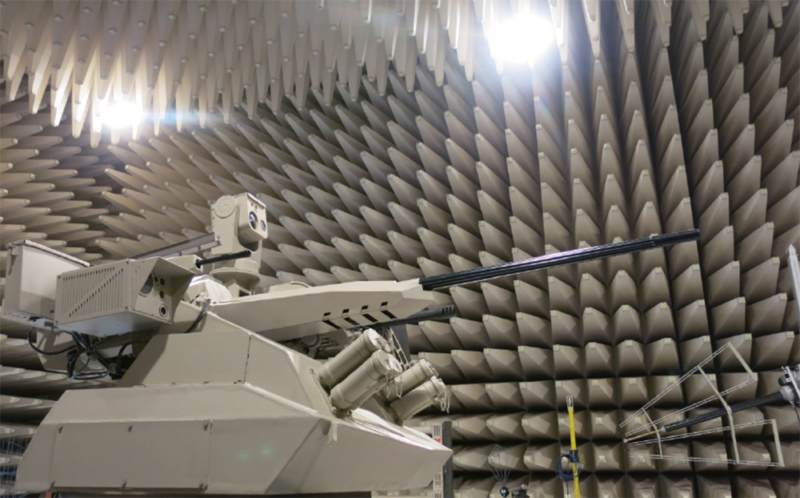
Dynamic turret test rigs utilizing advanced military linear actuators enable manufacturers to validate gun control and stabilization algorithms under simulated battlefield conditions. These test systems replicate the extreme shock loads generated by main gun firing—often exceeding 20g of acceleration—and the continuous vibration profiles experienced during cross-country mobility. By using precision linear actuators in test environments, engineers can refine control parameters before field deployment, ensuring that production vehicles meet the exacting accuracy standards demanded by modern armored warfare.
The transition to military linear actuators for turret control also yields significant logistical benefits. Electromechanical systems have dramatically fewer wearing parts than hydraulic equivalents—there are no seals to degrade, no fluid to filter and replace, and no pumps to maintain. This translates to reduced mean-time-between-failures (MTBF) and lower overall life-cycle costs, a critical consideration for military fleets that must remain operational for decades.
Suitable Products:
OD26 heavy duty electric linear actuator linear motor actuator[email protected]2026-08-28T05:48:10+00:00
2. Radar and Communication Antenna Positioning Systems

Precision Tracking for Threat Detection and Communications
Radar systems and communication arrays represent the nervous system of modern military operations, providing early warning, threat tracking, target acquisition, and secure data links. The effectiveness of these systems depends entirely on the precision with which antennas can be pointed. Military linear actuators serve as the primary drive mechanism in antenna positioner systems, controlling both elevation (pitch) and azimuth (yaw) movements with the accuracy necessary to capture faint signals and track fast-moving targets.
Land-based radar installations, naval shipboard rotating arrays, and vehicle-mounted communication systems all rely on military linear actuators to achieve smooth, continuous, or incremental positioning. Unlike standard industrial actuators, those designed for military antenna positioning must operate reliably after prolonged exposure to salt spray, sand, dust, and extreme temperature variations. They must also maintain precision despite the structural flexing of ship decks or vehicle mounts in dynamic environments.
Multi-Domain Application Requirements
In naval applications, military linear actuators control the elevation of phased array radar panels on destroyers and aircraft carriers. These systems must compensate for the rolling motion of the vessel while maintaining lock on airborne threats ranging from sea-skimming anti-ship missiles to high-altitude aircraft. The actuators provide the fine adjustment necessary to keep beam patterns aligned with target bearings, often requiring sub-degree pointing accuracy under load conditions that include wind resistance and ice accumulation on antenna surfaces.
For ground-based air defense systems, military linear actuators enable rapid elevation changes in fire-control radars that must transition from surveillance mode to tracking mode within seconds. When a hostile aircraft or drone is detected, the radar antenna must slew to the target bearing and elevate to the correct angle to begin generating firing solutions for air defense missiles. Linear actuators provide the high-speed response and positional accuracy required for these time-critical transitions.
Tactical military vehicles equipped with beyond-line-of-sight communication systems utilize military linear actuators to automatically deploy and position satellite communication antennas. When a convoy stops to establish a command post, automated actuator systems raise the antenna to the optimal elevation for satellite link acquisition, then continuously adjust to maintain alignment as the satellite traverses its orbital path. This automation reduces crew workload and ensures consistent communication quality without manual intervention.
Advanced Positioner System Integration
Modern antenna positioner systems integrate military linear actuators with precision feedback devices including resolvers, optical encoders, and inertial measurement units. This closed-loop architecture enables positioners to achieve arc-minute or even arc-second accuracy—essential for high-frequency communications and narrow-beam radar systems where even slight misalignment results in signal degradation.
The electromechanical nature of military linear actuators makes them inherently compatible with digital control architectures. Networked positioner systems can receive pointing commands directly from battle management computers, automatically orienting antennas to establish communication links with specific platforms or to scan designated sectors for threats. This level of integration is far more difficult to achieve with hydraulic or pneumatic positioning systems, which require additional transducers and conversion electronics to interface with digital networks.
Suitable Products:
OD26 heavy duty electric linear actuator linear motor actuator[email protected]2026-08-28T05:48:10+00:00
3. Missile and Rocket Launcher Positioning Systems
Rapid Targeting and Precision Aiming
Missile and rocket systems demand the highest levels of positioning accuracy and response speed. Whether mounted on ground vehicles, naval vessels, or fixed launch platforms, these systems must transition from transport configuration to firing configuration and achieve precise aim in minimal time. Military linear actuators provide the primary elevation and traverse drives for modern launch systems, replacing the older screw-jack and hydraulic mechanisms that were slower, less precise, and more maintenance-intensive.
Launcher elevation systems utilize military linear actuators to raise missile canisters or rocket pods from stowed positions to firing angles. These actuators must generate enormous force—often tens of thousands of pounds—to elevate heavy launch containers loaded with multiple missiles. At the same time, they must provide the fine adjustment capability necessary to achieve the exact elevation angle calculated by the fire-control system for optimal missile trajectory. The dual requirements of high force and high precision make roller screw-based military linear actuators particularly well-suited for this application.
Multi-Launch System Coordination
Modern multiple launch rocket systems (MLRS) and vertical launch systems (VLS) require coordinated movement of multiple launch tubes or cells. Military linear actuators enable synchronized elevation of entire launch pod assemblies, ensuring that all tubes achieve identical firing angles. This synchronization is critical for maintaining the dispersion patterns required for area targets and for preventing structural stress on the launcher frame that could result from uneven loading.
For surface-to-air missile systems, Military linear actuators facilitate the rapid elevation changes needed to engage high-speed aerial threats. When an aircraft or missile is detected, the launcher must elevate to the computed intercept angle within seconds. Linear actuators with high dynamic response characteristics—featuring high-pitch ball screws and powerful brushless DC motors—can achieve the necessary slew rates while maintaining the positional stability required for missile launch.
Aerospace and Test Applications
The application of military linear actuators extends beyond operational launchers to test and validation equipment. Rocket development programs require ground-based test rigs that simulate launch conditions and validate structural integrity. Linear actuator systems help aerospace companies position rocket assemblies for static fire tests, structural load testing, and transport simulation. These test applications subject actuators to extreme loads and duty cycles, validating their suitability for operational military deployment.
The electromechanical design of military linear actuators provides inherent advantages for missile launcher applications. They eliminate the fire hazard associated with hydraulic fluid leaks in proximity to rocket exhaust and missile propellants. They also simplify the decontamination process in nuclear, biological, and chemical warfare environments, as there are no hydraulic fluids that could trap contaminants or require special disposal procedures.
Suitable Products:
OD26 heavy duty electric linear actuator linear motor actuator[email protected]2026-08-28T05:48:10+00:00