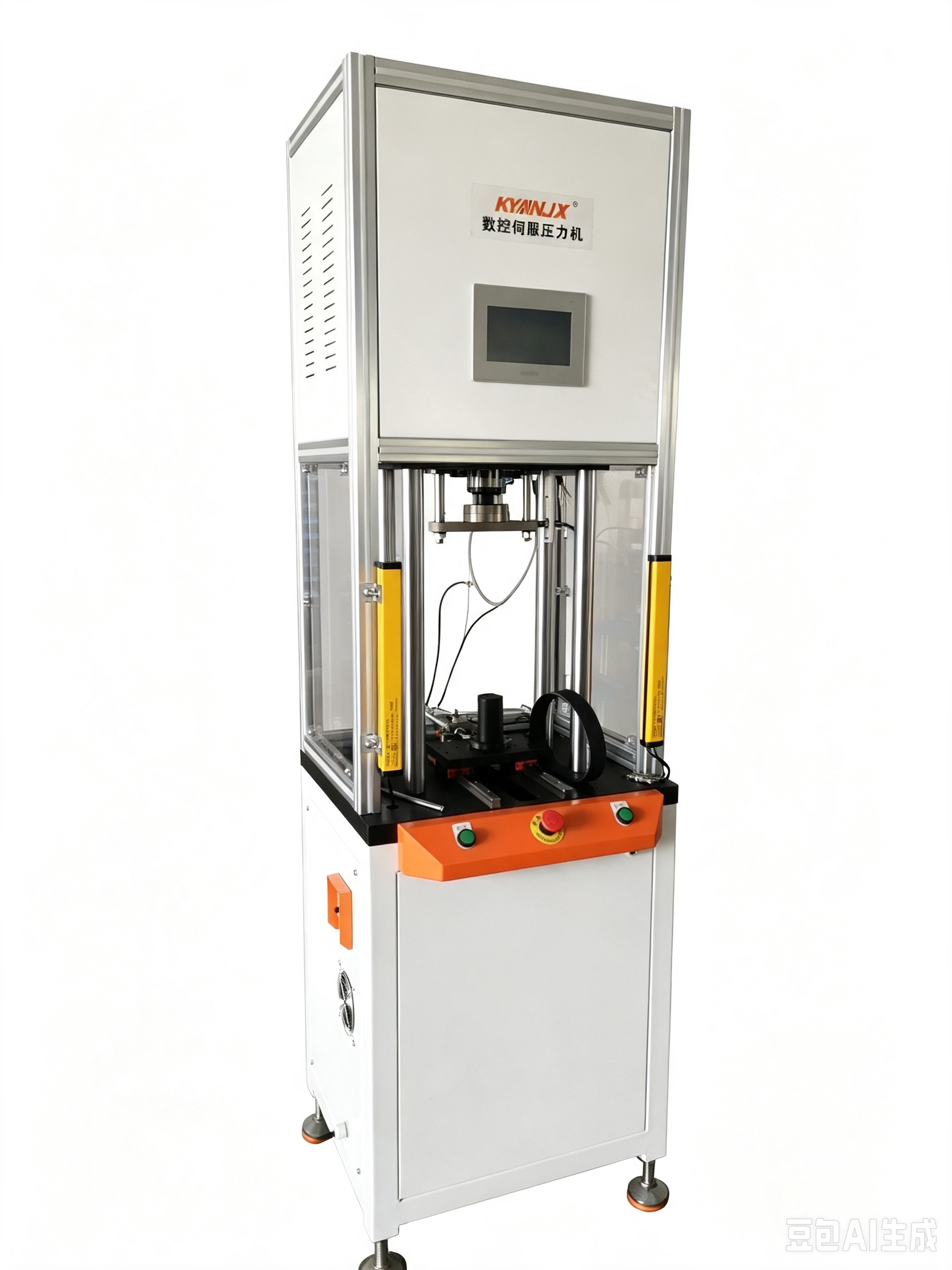
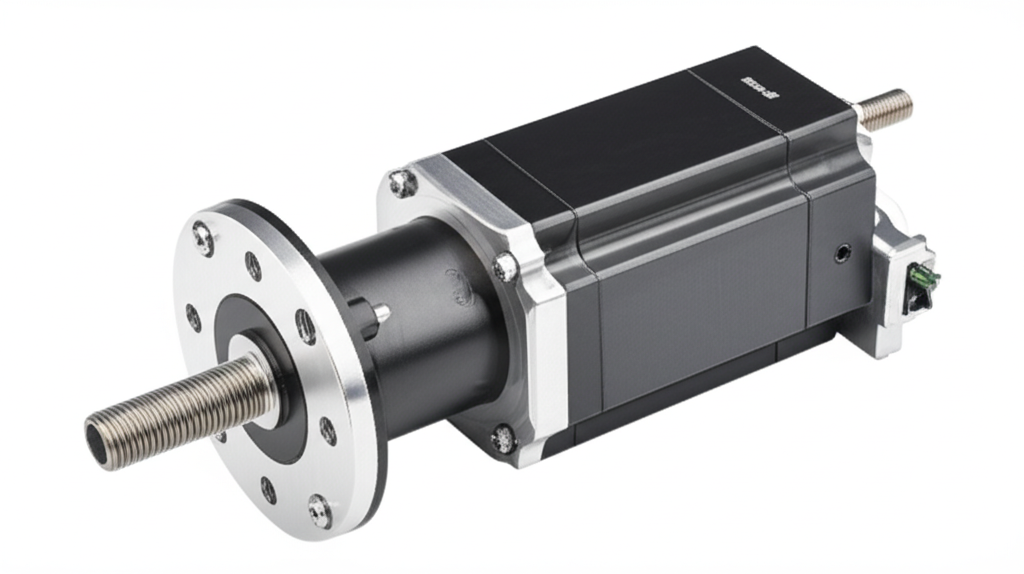
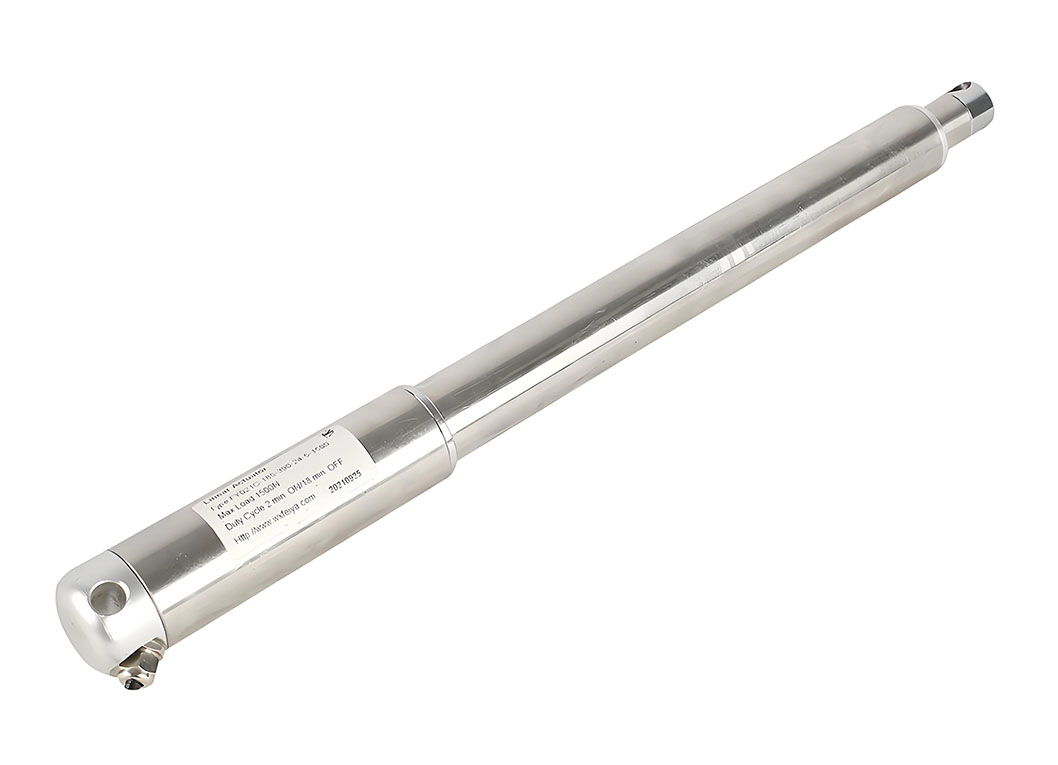
In modern industrial automation, the demand for precision, speed, and repeatability has pushed traditional motion systems to their limits. Servo linear motors and servo linear actuators have emerged as the preferred solution for applications requiring controlled straight-line movement with closed-loop feedback. Unlike conventional rotary servo motors paired with lead screws or belts, servo linear motion systems deliver direct translational force — achieving positional accuracy down to sub-micron levels while maintaining high dynamic responsiveness.
A servo linear motion system typically combines three core elements: a servo motor as the driving source, a feedback device such as an optical encoder or magnetic sensor, and a controller that processes real-time position data to correct deviations instantly. This architecture ensures that servo linear actuators can adapt to varying loads, maintain consistent performance over long operational cycles, and operate with minimal vibration and noise.
1. CNC Machining and Precision Manufacturing
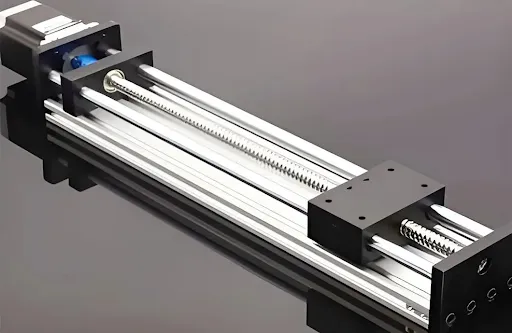
One of the most demanding environments for servo linear motors is CNC machining. Multi-axis milling centers and lathes require tool heads that move along X, Y, and Z axes with micron-level accuracy and high-speed traversal. Servo linear actuators equipped with ball screw drives or direct-drive linear motors enable rapid acceleration and deceleration without the backlash inherent in conventional lead screw systems.
For example, in high-speed machining of aluminum aerospace components, servo linear stages must maintain positioning repeatability within ±1 µm while traversing at speeds exceeding 3 m/s. The closed-loop encoder feedback continuously corrects for thermal expansion and mechanical deflection, ensuring that finished parts meet tight aerospace tolerances. Manufacturers such as Parker Hannifin and Hiwin produce linear motor stages specifically engineered for these ultra-precise CNC applications.

2. Semiconductor and Electronics Manufacturing
The semiconductor industry relies heavily on servo linear actuators for wafer inspection, photolithography alignment, and die bonding. In these cleanroom environments, even microscopic deviations can result in defective chips costing thousands of dollars. Ironless linear servo motors are preferred here because they produce zero cogging torque, delivering ultra-smooth motion essential for photonics alignment and metrology.
Specific applications include:
- Wafer probers — servo linear stages position wafers under test probes with nanometer precision.
- Pick-and-place machines — high-speed gantry systems use servo linear motors to place surface-mount components at rates exceeding 100,000 components per hour.
- LCD panel inspection — large-format linear motors scan inspection cameras across Gen-10.5 glass substrates measuring over 3 meters in width.
3. Medical Devices and Surgical Robotics
In the medical field, servo linear actuators provide the silent, smooth, and accurate motion required for patient safety. Robotic-assisted surgery platforms such as the da Vinci system depend on compact servo linear motors to control instrument arms with sub-millimeter precision. The absence of mechanical contact in direct-drive linear motors eliminates particle generation — a critical requirement in sterile surgical environments.
Beyond surgery, servo linear motion systems power MRI-compatible patient tables, automated liquid handling systems in diagnostic laboratories, and precision drug dispensing pumps. These applications demand not only accuracy but also extremely low audible noise and consistent force output under varying patient loads.
4. Industrial Robotics and Material Handling
Collaborative robots (cobots) and automated guided vehicles (AGVs) increasingly adopt servo linear motors for end-of-arm tooling and lifting mechanisms. Unlike pneumatic cylinders that offer only binary extend/retract motion, servo linear actuators provide programmable force, position, and velocity profiles. This enables robots to perform delicate assembly tasks — such as inserting connectors or pressing bearings — with precisely controlled force to avoid damaging components.
In warehouse automation, servo-driven vertical lifts and conveyor diverters adjust their motion dynamically based on package weight and dimensions. The feedback control loop compensates for load variations in real time, preventing the oscillation and overshoot common in open-loop stepper systems.
5. Solar Tracking and Renewable Energy Systems
In the renewable energy sector, servo linear actuators play a vital role in optimizing solar panel orientation. Dual-axis and single-axis solar trackers use heavy-duty servo linear motors to adjust panel tilt and azimuth angles throughout the day, maximizing energy capture. Unlike simple DC motor drives, servo-controlled tracking systems can compensate for wind gusts and snow loads by adjusting torque output in real time.
A 10 kW residential solar array equipped with servo linear actuators can achieve 25–35% higher annual energy yield compared to fixed-tilt installations, with positioning accuracy within ±0.5° of the sun’s trajectory.
Linear servo motors are also finding applications in wind turbine blade pitch control, where their rapid response and precise positioning improve aerodynamic efficiency and protect turbines from overspeed conditions.
6. Packaging, Printing, and Textile Machinery
High-speed packaging lines require servo linear motors to synchronize filling, sealing, and labeling operations. In flow-wrap machines, servo linear actuators control film feed tension and cutting blade position with microsecond-level timing accuracy. Similarly, in digital printing presses, linear motor stages position print heads across wide-format substrates while maintaining constant velocity to prevent banding artifacts.
Textile machinery manufacturers integrate servo linear motion into knitting and weaving machines to control yarn tension and fabric feed rates. The ability to execute rapid reversals and micro-adjustments enables complex pattern creation without mechanical cam systems.
7. Metrology, Optics, and Laboratory Automation
Coordinate measuring machines (CMMs) and optical inspection systems depend on servo linear actuators to move probes and cameras along precisely calibrated paths. In these applications, servo linear motors must deliver smooth, vibration-free motion because any mechanical disturbance directly impacts measurement accuracy.
Laboratory automation platforms — such as automated pipetting systems and DNA sequencers — use compact servo linear stages to position microplates and reagent cartridges. The high repeatability of these systems (often exceeding ±2 µm) ensures that experimental protocols produce consistent, reproducible results across thousands of samples.
Conclusion
From the factory floor to the operating room, servo linear motors and servo linear actuators have become indispensable components in precision automation. Their unique combination of direct-drive efficiency, closed-loop accuracy, and dynamic load adaptability makes them superior to conventional rotary-to-linear conversion systems across virtually every high-performance application. As industries continue to demand higher throughput, tighter tolerances, and smarter manufacturing, the adoption of servo linear motion technology will only accelerate — driving innovation in CNC machining, semiconductor fabrication, medical robotics, renewable energy, and beyond