Heavy Duty Linear Actuators and Servo Motor Electric Cylinders in Aerospace and Military Applications
Introduction
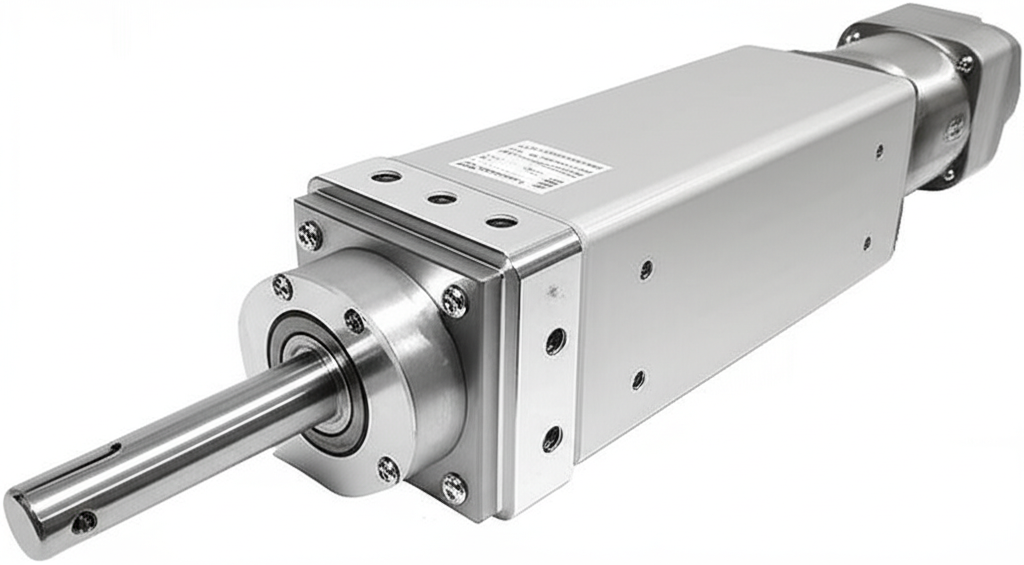
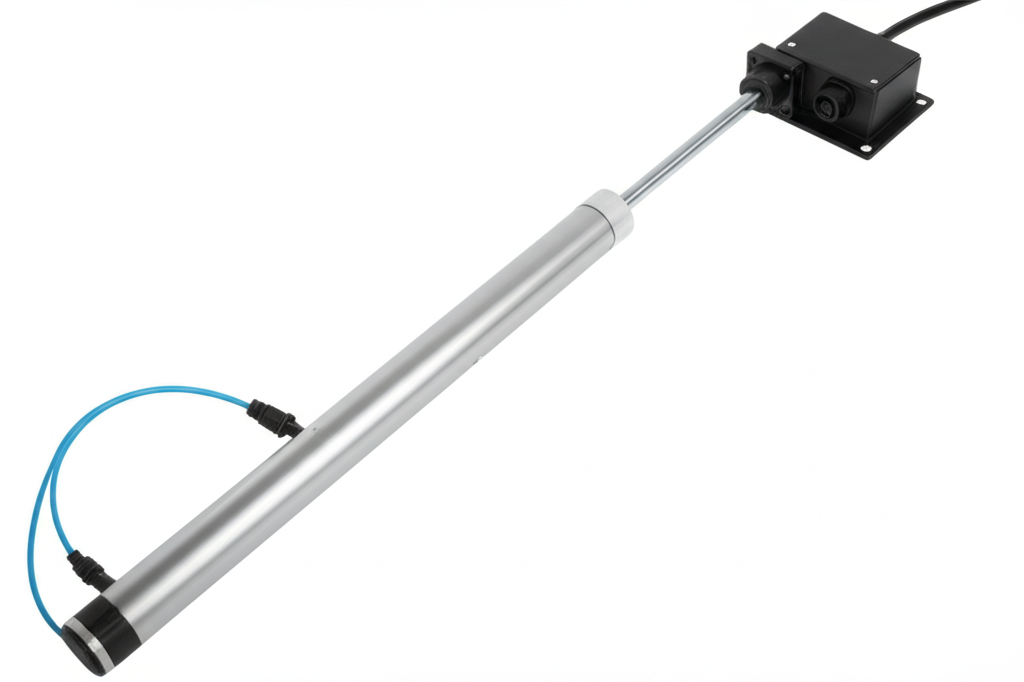
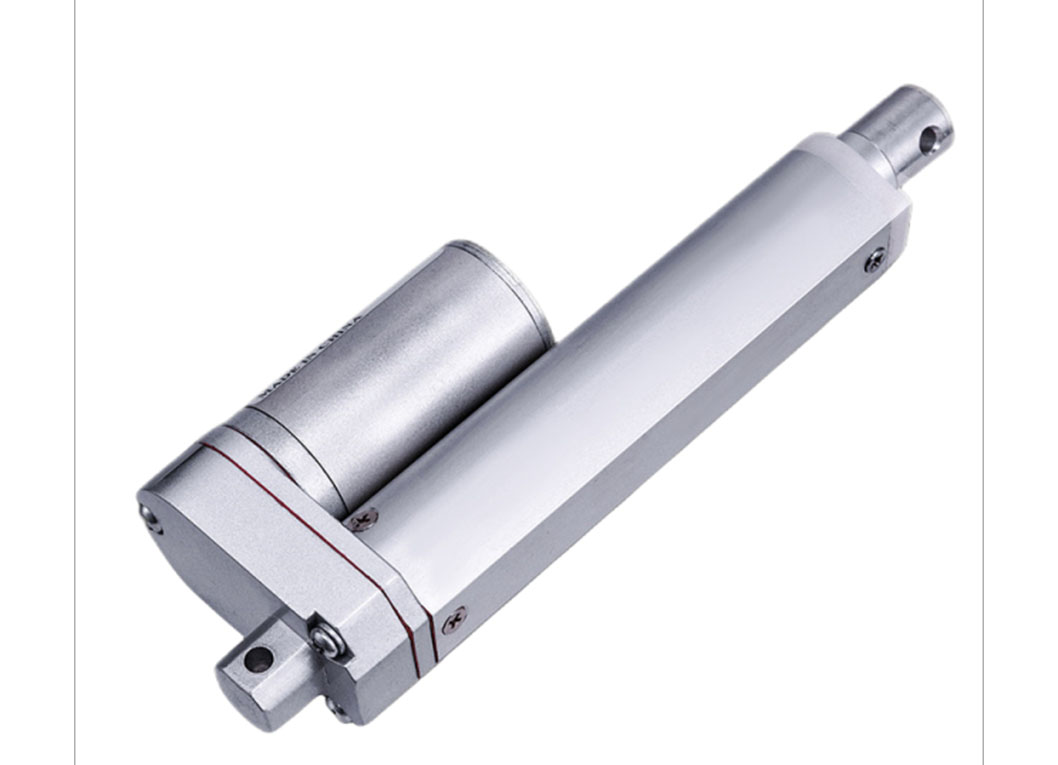
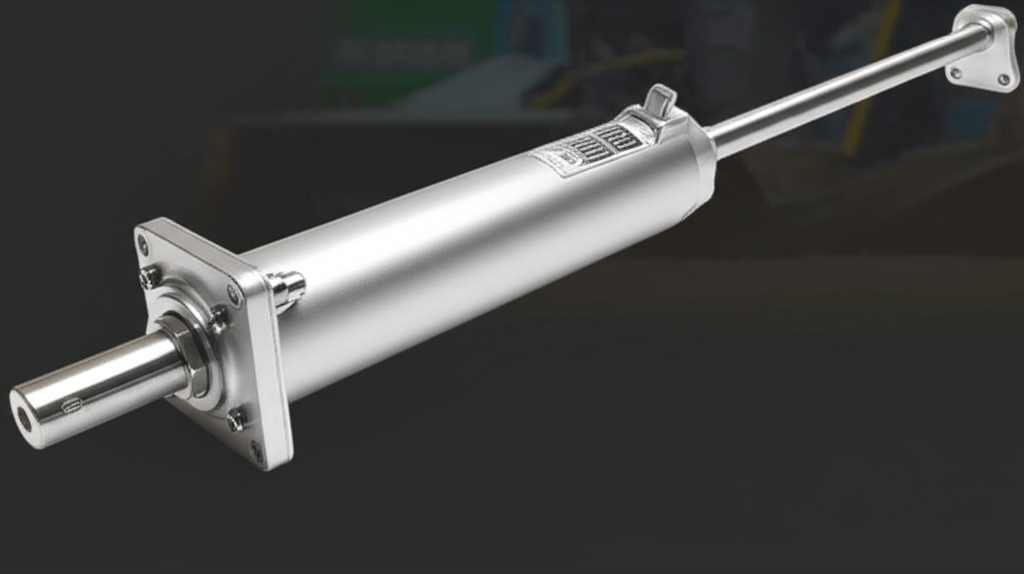
In the aerospace and defense industries, precision, reliability, and durability are not optional—they are mission-critical. As hydraulic and pneumatic systems gradually give way to cleaner, more controllable electric drive technology, the heavy duty linear actuator and the servo motor electric cylinder have become the backbone of modern aircraft flight control, radar platforms, missile launch systems, and military ground support equipment. This article explores real-world application cases, underlying design philosophy, and the parameter requirements that define these high-performance electromechanical systems.
1. Aircraft Flight Control and Surface Actuation
Modern aircraft rely on electromechanical actuators (EMAs) to move primary flight surfaces—ailerons, elevators, rudders, flaps, slats, and spoilers—as well as secondary systems such as landing gear doors, cargo doors, and thrust reversers. Compared with traditional hydraulic actuators, electric solutions eliminate fluid leakage risks, reduce maintenance intervals, and enable “more-electric aircraft” architectures that save weight and fuel.
Application case: On wide-body commercial and military transport aircraft, redundant heavy duty linear actuators rated for dynamic loads of 20–80 kN drive flap and slat systems, while smaller smart actuators position inlet guide vanes and air brake panels. Each actuator integrates brushless DC motors, planetary roller screws, and dual-channel position feedback for fail-operational performance.

Design philosophy: Redundancy and fault tolerance drive every decision—dual windings, independent resolver channels, and mechanical jam-tolerant architectures ensure that a single failure never results in loss of control. Weight minimization is achieved through titanium housings and hollow-shaft motor integration.
Key parameters:
- Thrust: 10–100 kN
- Stroke: 50–500 mm
- Speed: 20–150 mm/s
- Position accuracy: ±0.1 mm
- Operating temperature: −55 °C to +125 °C
- Qualification: RTCA/DO-160, MIL-STD-810

2. Military Radar Antenna Leveling and Stabilization
Ground-based and vehicle-mounted radar systems must deploy, level, and precisely stabilize heavy antenna arrays weighing tens of tons. Here the servo motor electric cylinder replaces hydraulic jacks entirely.
Application case: A 60-ton radar leveling system uses multiple high-capacity servo electric cylinders, each delivering 60 t (≈600 kN) of thrust with micrometer-level synchronization. Closed-loop servo control ensures the antenna platform remains level within 0.05° even on uneven terrain, while low-inertia servo motors enable rapid deployment and stowage in under three minutes—critical for survivability in mobile military operations.
Design philosophy: The core idea is “precision under extreme load.” Planetary roller screw technology (rather than ball screws) is selected for its far higher load capacity and shock resistance. Self-locking capability ensures the antenna stays in position even with power removed—a key battlefield requirement. Sealed enclosures with IP65/IP67 ratings protect against dust, rain, and salt fog.
Key parameters:
- Thrust: 100–600 kN
- Positioning accuracy: ±0.02 mm
- Synchronization accuracy across cylinders: ±0.1 mm
- Duty cycle: 100% continuous at rated load
- Shock/vibration: MIL-STD-810G
- EMI compliance: MIL-STD-461
3. Aerospace Test Rigs and Satellite Ground Equipment
Servo motor electric cylinders are extensively used in structural test benches, vibration simulation platforms, and spacecraft ground support. Multi-axis Stewart platforms built from six servo electric cylinders reproduce launch vibration profiles and landing impact loads with full-programmable force and displacement control.
Design philosophy: In testing, the guiding principle is “dynamic fidelity”—high bandwidth (response frequency up to 100 Hz), low friction, and backlash-free transmission so that commanded waveforms are reproduced exactly. Direct-drive servo motors coupled with high-resolution encoders (23–26 bit) deliver the stiffness and responsiveness that hydraulic systems struggle to match at low amplitudes.
Key parameters:
- Force range: 5–500 kN
- Frequency response: up to 100 Hz
- Force control accuracy: ±0.5% FS
- Stroke: up to 2,000 mm (custom)
4. Defense Servo Actuation for Weapon Systems and UAVs
Compact heavy duty linear actuators power UAV flight surfaces, missile fin control, turret adjustment, and launcher elevation. Military-grade servo actuators emphasize miniaturization, instant high-torque response, and resistance to extreme environments.
Design philosophy: Integrated “smart actuator” design places the servo drive, controller, and position sensor in one sealed housing, reducing wiring weight and simplifying platform integration. Radiation-hardened electronics and wide-temperature lubricants ensure function from arctic deployments to desert operations.
Key parameters:
- Thrust: 2–50 kN (compact form factor)
- Response time: <50 ms full stroke
- Temperature: −55 °C to +125 °C
- Altitude: operation up to 20,000 m equivalent
- MTBF: >10,000 hours
Conclusion
From airliner flight surfaces to 60-ton radar platforms, the heavy duty linear actuator and servo motor electric cylinder are redefining actuation in aerospace and military engineering. Their shared design DNA—redundancy, extreme-environment robustness, closed-loop precision, and maintenance-free electric drive—makes them the preferred choice where failure is not an option. As more-electric and all-electric platforms continue to expand, demand for high-thrust, high-precision electromechanical actuation will only accelerate.